Getting Started
Pexels.com (Title: Red And Green Nintendo Switch Switched On, Photographer: Pixabay) CC BY 3.0
Children love digital games, whether on a tablet, PC or console. Which is not a bad thing per se. Digital games have many positive effects on children. For children, gaming is not just a pastime, but a way to engage with themselves and their environment. Gaming gives them freedom and strengthens skills such as strategic thinking, spatial orientation and memory. The fun of gaming is often linked to various learning contents.
However, parents often find it difficult to correctly assess digital games and their suitability for children. And with the abundance of offers, it is easy to lose sight of the big picture.
Your task as a MediaParent consultant is to give parents the appropriate support to better orient themselves in the gaming world.
At the end of the module, you will know the children's gaming world better and will be able to give parents useful tips and advice on how to deal with digital games in the family.
Learn More
Fascination Game World
The fascination of digital games for children lies above all in the fact that they can slip into other roles and experience exciting adventures. They can prove their playful skills, compete with others and experience self-efficacy.
Getting to know the world of games - the different genres and platforms
In order to better assess which games are suitable for children between the ages of six and twelve, what they promote and what they require, it is useful to know the different types of games and game systems. On the link "Video Game Genres: Everything You Need to Know" you will find a good overview of the best-known genres. On the right-hand side of this page, you find also "A Guide to the Different Types of Video Game Platforms".
Let's Play(s)
To get an insight into children's games and to understand them better, you no longer have to play them yourself. A good recommendation for parents can be to watch Let's Plays. In Let's Plays, you can watch other people play digital games and comment on them while they are playing. This is then published on YouTube or live on Twitch, for example. This is explained again in the video "Lets Plays explained - Why do we have lets plays?” on the right.
Mastering Challenges, Recognising Risks
For children, gaming means one thing above all: fun and self-efficacy! They can always learn something and train their cognitive and motor skills. In order to avoid disputes in the family and not to neglect compensatory offers, firm rules in the family help. What can these rules look like? And what tips and advice can you give parents as a future MediaParent consultant?
A highly recommendable website - not only with regard to gaming - is mediasmarts.ca. Here parents can find everything that is important on the subject of media education. How to make gaming child-friendly and fun, what rules can be set up in the family and what you can use to guide the age suitability of a game is explained on the page "Video Games" is very clearly presented.
Gaming is a sociable and fun way to spend time, play in a team and develop different skills. All very positive things. But there are a few risks for parents to consider, especially with online games, so that their children have good gaming experiences. The most important risks of online games, such as cybergrooming, cyberbullying, in-app purchases and data protection are clearly presented on the page "Online gaming - The risks" by internetmatters.org.
Can digital gaming be addictive?
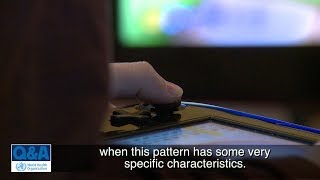
At a parents' evening about games, the question of whether gaming is addictive is bound to come up at some point. Here you can first reassure the parents. The probability of developing a so-called "gaming disorder" is very low. You can find out which factors speak for an addiction in the video "WHO: Gaming disorder: questions and answers (Q&A)". As long as children pursue their hobbies, meet friends and go to bed at a reasonable time, there is no reason to worry.
Game Recommendations
The range of games is incredibly large. And not all games are suitable for children between the ages of six and twelve. You can find a few age-appropriate and tested games on the right under the link "25 Best Online Computer Games For Kids".
Provide Balance
Digital games can be an excellent complement to other leisure activities for children. However, there should always be a balance or alternatives to digital games, such as outdoor activities or analogue game nights.

Exercise
- Describe in your own words why children need guidance in choosing games and in playing games themselves.
- Make a list of the most important criteria parents look for in games and what rules can be established within a family. You can then give these to the parents as practical tips and concrete help to take home.
- What do you see as the biggest challenges and risks? Write down the most important points.
What you learn in this course
- You will be able to describe what role digital (online) games play for children between 7 and 12 years of age.
- You will be able to explain which learning possibilities and opportunities digital games offer for this age group.
- You will be able to name game genres and distinguish them from a selection as well as name different platforms for digital (online) games.
- You will be able to explain what Let's Plays are and why they are so popular.
- You will be able to identify risks and challenges of digital games for this age group (e.g. cybergrooming, advertising/app purchases/cost traps, data protection, problematic content, excessive gaming) and develop ways to reduce and avoid them.
- You will be able to name features for the assessment of digital (online) games (e.g. age limits, advertising content).
- You will be able to examine unknown contents for their suitability for this age group and to classify them according to characteristics and to classify them into genres.
- You will be able to explain why and when children between 7 and 12 need guidance in selecting and assessing content.
- You will be able to clarify how this child-oriented guidance can take place and give examples of what it can look like.
Get ready: Tips for MediaParent consultants
As a future MediaParent consultant, you are now introduced to the fantastic world of children's games and can give parents helpful advice to take home.
The topic of gaming is particularly suitable for actively involving parents at your parents' evening and presenting the topic in a fun way. Just pick up the parents in their past and let them become a child again themselves.
For example, at the beginning of the parents' evening you can play through a Media Quiz together with the parents. This loosens the atmosphere and gives you a first impression of the parents' knowledge on the topic. Afterwards, take a look back at their childhood together with the parents. Many of them already played digital games themselves. Ask the parents: "Who played digital games?" "Who still plays today? "What did you find so fascinating about them? "What do you yourself look out for in games"? etc.
When talking about Let's Plays, briefly watch a few clips of popular Let's Players on children's favourite games. This way, parents not only learn what Let's Plays are, but also get a first impression of the game world presented.
Resources
Links
“Video Game Genres: Everything You Need to Know”
https://www.hp.com/us-en/shop/tech-takes/video-game-genres
“A Guide to the Different Types of Video Game Platforms”
https://starloopstudios.com/what-are-the-best-platforms-for-video-games/
English
Svenska
Slovenčina
Deutsch
Čeština
Български