English
  Svenska
  Slovenčina
  Deutsch
  Čeština
  Български
Getting Started
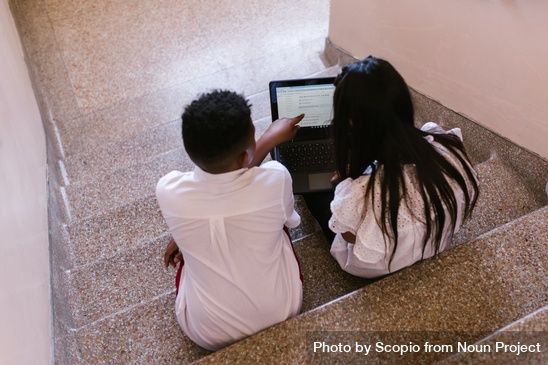
Back View Of Girl And Boy With Laptop In School by Scopio from NounProject.com
In the previous four modules you have learned more about social media and instant massaging, how this new form of communication affects children, what risks can occur, but also what opportunities arise. In this module we will show you how to pass on this knowledge to parents in a parents' evening.
Apart from some organisational tips, which were already part of the basic course 1 in detail, the focus of this module will be on structuring your content as well as exchange and communication with parents.
Learn More
Follow this process to set up a successful Media Parents meeting. Start by watching the videos that show some online tools for for setting up a meeting for parents. Use the web links and tips before you begin your planning process.
Next read the documents in this order
1. Choice of Dates, the Time Frame and the Number of Participants
These documents help you plan and choose the best dates and time to hold a Media Parents meeting. It gives tips on the minimum and maximum number of participants.
2. Room Layout and Choice of Technology
Here we look at what technical equipment for presentations are needed and how best to plan the seating and delivery positions.
3. Topic Selection and Invitation
Don’t try to present everything at once. Plan your Media Parents event using the extensive resources that we provide and adapt to the needs of the group and the time frame you have set. How do you reach the parents in the first place?
Exercise
This task deals with the basic planning and organisation of a media educational parents' evening. The most important aspects are briefly but clearly presented to prepare well for the event and not to forget anything.
Your task is to plan and execute a parents evening focusing on the Topic of Social Media and Instant Messaging using the material and processes provided. Use the videos and URLs to help you prepare. Follow the four process documents to help you plan the time and date, prepare the technical equipment and room layout. Find out which topics to include and how to market your event. If necessary, take another look at the basic course, where there is a module on this topic.
Top tip! Don’t try to cover too much in the same meeting. You can always plan a follow up or give parents’ things to do or read at home.
What you learn in this course
- You'll be able to formulate subtopics of a parents' evening on the topic "Social Media and Instant Messaging " for the age group.
- You'll be able to name the elements of a parents' evening on this topic.
- You'll be able to describe methods for conducting a parents' evening on this topic.
- You'll be able to independently assign methods to selected sub-topics.
- You can compile the topic and the methods of a (fictitious) parents' evening with the help of the knowledge from Course 1 and Course 10.
- You'll be able to name and correctly allocate the fields of application of the additional materials.
- You can use the additional materials in a target-oriented way.
- You'll be able You'll be able to plan a (fictitious) parents' evening on the topic "Social Media and Instant Messaging " for the age group with the help of the checklists and the planning sheet from course 1.
- You'll be able to use additional materials and show possibilities for change.
Get ready: Tips for MediaParent consultants
Parental awareness sessions are a valuable opportunity to provide families with advice and support; however, attendance at these types of events can vary, so they should not be used in isolation. To ensure the best turn out at your event, consider the following suggestions:
Make it convenient
Ensure as many parents as possible can attend by asking them when they would prefer the session to be offered, Coffee mornings allow parents to attend just after the school run and can save them an extra journey, whilst evening sessions may better accommodate families who work during the day. Some settings also “record” sessions so it is available to parents who could not attend in person.
Invitations and reminders
Send out invitations in advance to all parents/carers via printed letter, text/SMS and/or email. Send out a few reminders leading up to the event, ideally with different content, to encourage parents to attend. A directly addressed letter may help engage parents so why not get the children to write letters to their own parents.
Publicity and posters
Highlight the event in a variety of ways, e.g. setting website, official social media, and/or newsletters. Display posters in public areas, such as reception, playgrounds and notice boards.